Episode 76
Fire, Brimstone and Converse
Listen to this episode
Show Notes
What if the sacred and the secular were never two different things to begin with?
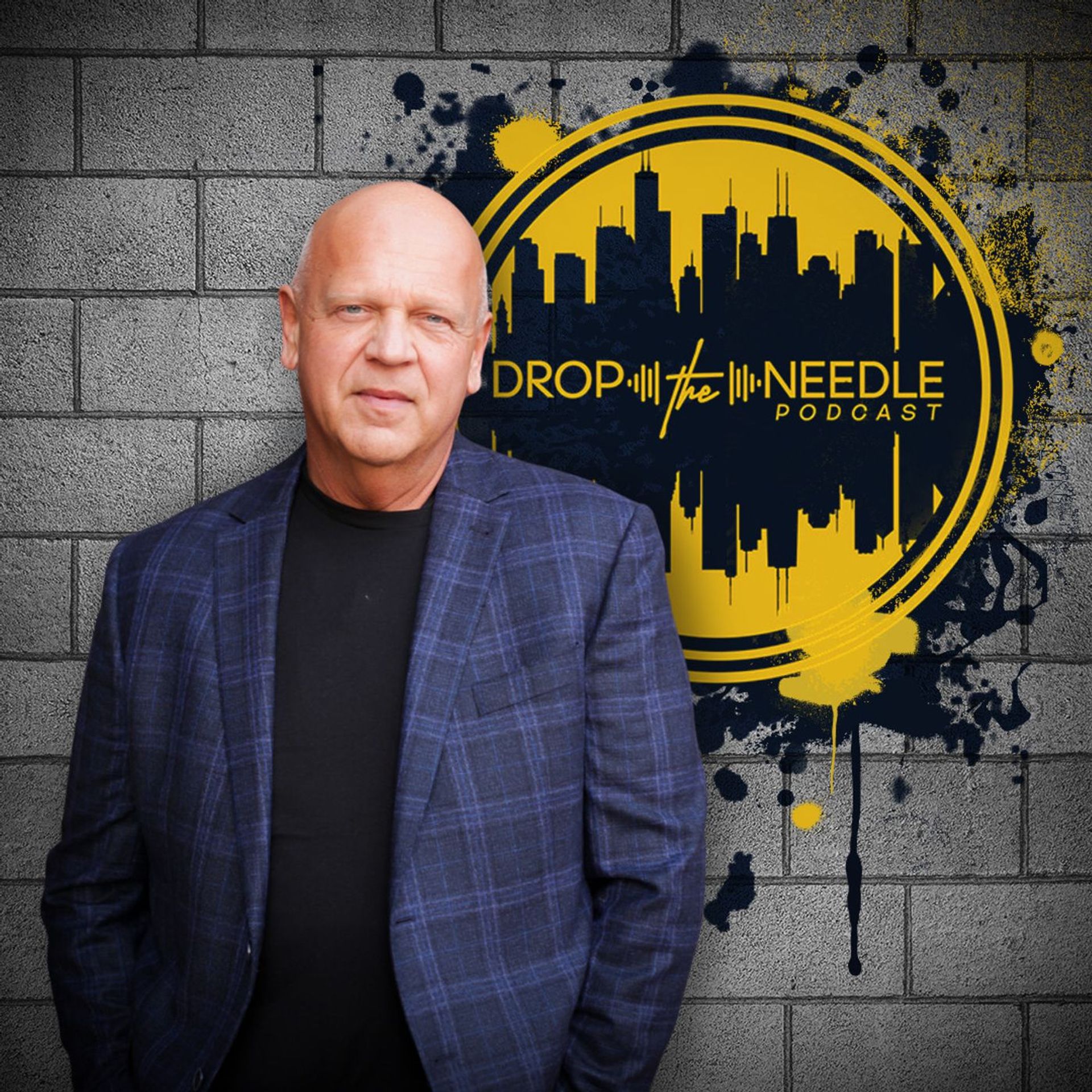
Rev. Dr. Rob Zahn is a Lutheran pastor, a theologian, a semiotician, and a musician. He wears Converse under his liturgical robes. He also wrote a book about LSD, a drug smuggling ring, and the birth of contemporary Christian music. To him, none of that is a contradiction. That is the whole point.
Jim Alstott sits down with Rob to trace a life that runs from a small town childhood with an absent father, through a doctorate in semiotics, to the hidden history behind his book, LSD to Galilee: Incarnation in the Psychedelic Subculture.
Rob explains why he does not frame his father's absence as a forgiveness issue, even after a reunion that surfaced anger, grief, and questions nobody answered. He walks Jim through the line that runs from the Brotherhood of Eternal Love to the Jesus People movement to Maranatha Music, and why Lonnie Frisbee got quietly written out of the cleaner version of that story.
Then there is the music. Mumford and Sons in a stadium full of strangers singing the same words. Dave Matthews Band. Meatloaf. Hamilton. Disney soundtracks he refuses to apologize for.
Key Topics
- Growing up in small town America, raised by a single mother
- Why forgiveness may be the wrong frame for an absent father
- Meeting his father, and the seven year delay that followed
- What semiotics reveals about culture, congregations, and blind spots
- Why the sacred and secular divide does not hold
- Converse under the robes, and other small acts of resistance
- The Brotherhood of Eternal Love to the Jesus People to Maranatha Music
- How Lonnie Frisbee was written out of the story
- Psychedelics, sacrament, and music as portals to the divine
- Why the church has to keep being put in check by people, not power
Notable Quotes
“I’m not sure forgiveness is necessary.”
“There’s no division between the sacred and secular. I think that’s a made up thing.”
“I don’t know if there’s a more human experience than music.”
“Which means he wasn’t paranoid. He was still underground.”
Chapters
- 00:00 Welcome: a pastor, a semiotician, a musician
- 01:24 Rob’s childhood, music upbringing, and path into ministry
- 03:41 Questioning father absence through theology and identity
- 06:48 Why forgiveness may not be the right frame
- 12:07 The anger and grief that surfaced anyway
- 13:59 What semiotics reveals about signs, culture, and the church
- 19:35 Mumford and Sons, spirituality, and a stadium full of shared meaning
- 22:58 Why the sacred and secular divide doesn’t hold
- 26:46 How psychedelic culture and Jesus music are historically connected
- 30:46 Why Lonnie Frisbee was written out of the cleaner church narrative
- 35:14 How Rob’s congregation responds to his full story
- 39:42 The Chosen, outsiders, and meeting people where they are
- 46:53 Doubting certainty and embracing the unknown
- 56:43 Music, worship styles, and Rob’s first ministry in Las Vegas
- 01:02:26 Rob’s father, cancer, and the Brotherhood’s underground history
- 01:08:01 Jim shares his own father story and reconnection
- 01:10:57 The music round begins: first radio song, road trip songs, high school anthem
- 01:15:15 Guilty pleasure soundtrack and Disney singalongs
- 01:16:55 A song that could change how people see the world
- 01:18:38 A song that feels written for Rob’s life right now
- 01:22:12 Where to find Rob, and we drop the needle
Today’s Playlist
Playlist link:
https://open.spotify.com/playlist/7C9T8To450S3f03qK4Gelq
Mentioned in This Episode
LSD to Galilee: Incarnation in the Psychedelic Subculture by Rob Zahn
Zumbro Lutheran Church in Rochester, MN
Connect with Rev. Dr. Rob Zahn
Website: robzahn.com
Instagram: @rzahn001
Facebook: facebook.com/rob.zahn
LinkedIn: linkedin.com/in/robzahn
Connect with Jim Alstott
Book: Did I Just Have a Spiritual Awakening, or Was It Something I Ate?
Website: jimalstott.com
Podcast: dtnpodcast.com